
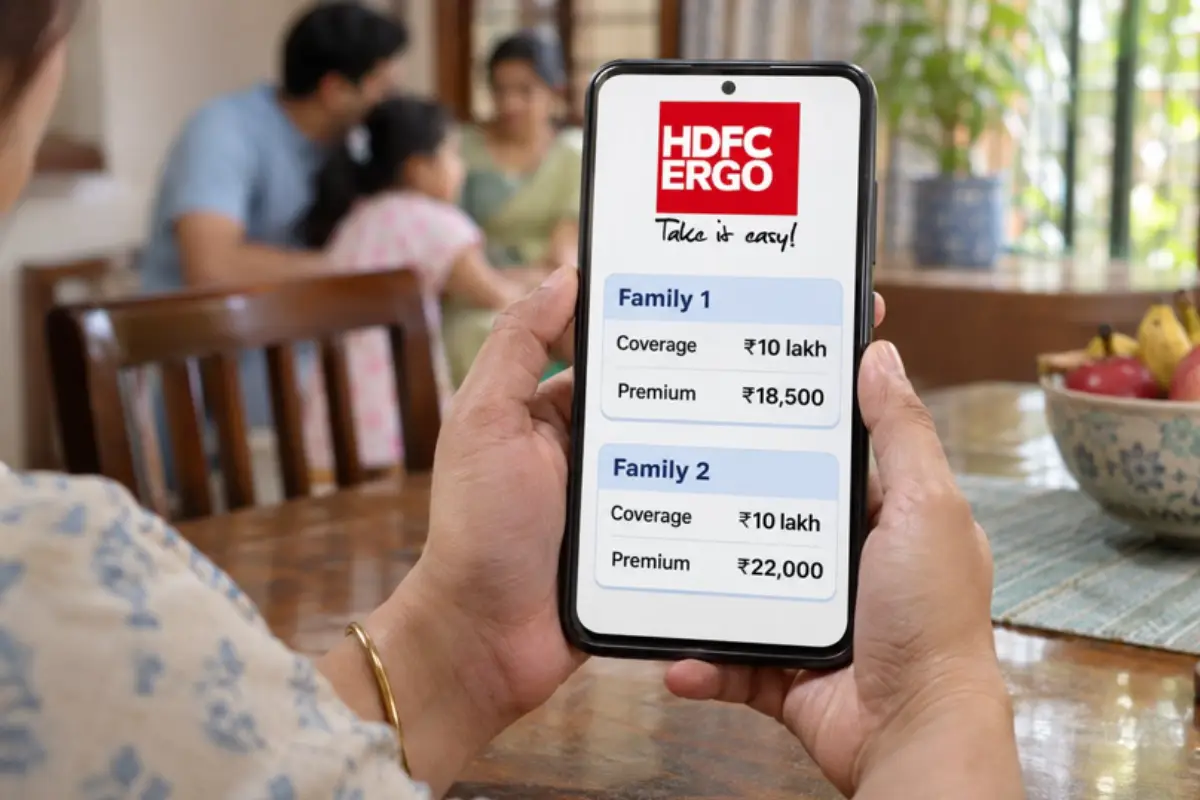
Two households each include two adults and two children. Both choose a family floater plan with the same sum insured, yet their premium quotes look different. The difference is not always about the amount of protection.
Insurers use information about the people being insured, where they live and how the cover is arranged. A few small choices can also increase what a family pays. Here is what changes the premium and what you should read carefully before making a decision.
Table of Contents
Age of the Eldest Member
Family floater premiums often depend on age. HDFC ERGO’s Arogya Sanjeevani also uses members’ age bands to calculate premiums, so two families with the same sum insured may receive different quotes.
- Older age: Health risks and the likelihood of hospital treatment generally rise with age.
- Age bands: Moving into a new band can change the premium at renewal.
- Family members: Adding an older parent may affect both eligibility and pricing.
Policy Structure, Riders and Add-On Benefits
Matching sums insured do not always mean matching policies. One family may have a basic floater, while another selects extra benefits. These extras can raise costs, even when advertised health insurance coverage looks identical.
- Riders: Optional benefits, such as hospital cash, cost extra where offered.
- Waiting period options: A shorter wait for certain conditions may be available at an additional cost.
- Cost sharing: Choosing a voluntary co-payment may reduce the premium, but increases the family’s share of eligible bills.
Geographic Location and City Tiers
Your home address can affect the premium. Many insurers use location-based pricing because treatment charges differ across cities. A household in Mumbai may be placed in a different pricing zone from one in a smaller town.
- City tier: Metro areas can attract higher base rates.
- Zone rules: Hospital treatment outside the chosen zone may bring a co-payment under some plans.
- Correct details: Use your actual residential address, not a cheaper postal code.
Pre-Existing Conditions and Medical Underwriting
An insurer may ask about diagnosed illnesses, treatment and ongoing medication before issuing a policy. This review is called medical underwriting. Disclosed diabetes or heart disease can influence the terms offered, though every insurer has its own rules.
- Premium loading: An additional charge may apply after underwriting.
- Waiting periods: Certain existing conditions may not be covered immediately.
- Disclosure: Give complete medical information to avoid problems when claiming.
Tobacco Use and Lifestyle Habits
Two adults of the same age can still have very different health profiles. Tobacco use, including smoking or chewing tobacco, may lead to a higher premium under some policies.
- Habit details: Insurers may ask exactly what is used and how often.
- Related conditions: Existing breathing or heart problems can affect underwriting.
- Accurate answers: Do not leave out occasional tobacco use when the form asks about it.
Employer-Sponsored vs Individual Health Insurance
A family under an employer’s group plan may pay less directly than a family buying a retail policy. The employer might fund part or all of the cost. Group premiums also depend on the workforce covered, rather than only one household.
- Employer contribution: Your salary deduction may not reflect the full premium.
- Dependent cover: Adding a spouse or children can require an employee payment.
- Job changes: Workplace cover may end or change when employment ends.
Payment Frequency and Financing Charges
The premium shown for a year may not equal the total paid through monthly instalments. Some insurers apply an additional charge for payment modes other than annual payment. Separate financing can bring extra costs.
- Payment mode: Check the total payable, not just each instalment.
- Financing: Read any interest or service fees before signing.
- Due dates: Missed instalments can affect continuation of cover under the policy terms.
Conclusion
Different premiums do not automatically mean one family is getting a better deal. The same sum insured is only the starting point. Age, location, health declarations, tobacco use, added benefits and payment choices all shape the final amount. Read the premium breakdown and policy wording together, especially any loading, co-payment or waiting period. That way, the figure you pay has a clear reason behind it and fewer costly surprises later.